I joined this Training Course because I thought it would be an interesting opportunity to learn more about Nonviolent Communication and meet people from different countries.
I came back with that… and with something I hadn’t expected at all.
It was my first Erasmus+ project and, looking back now, I think it marked the beginning of a completely new direction I want to explore.
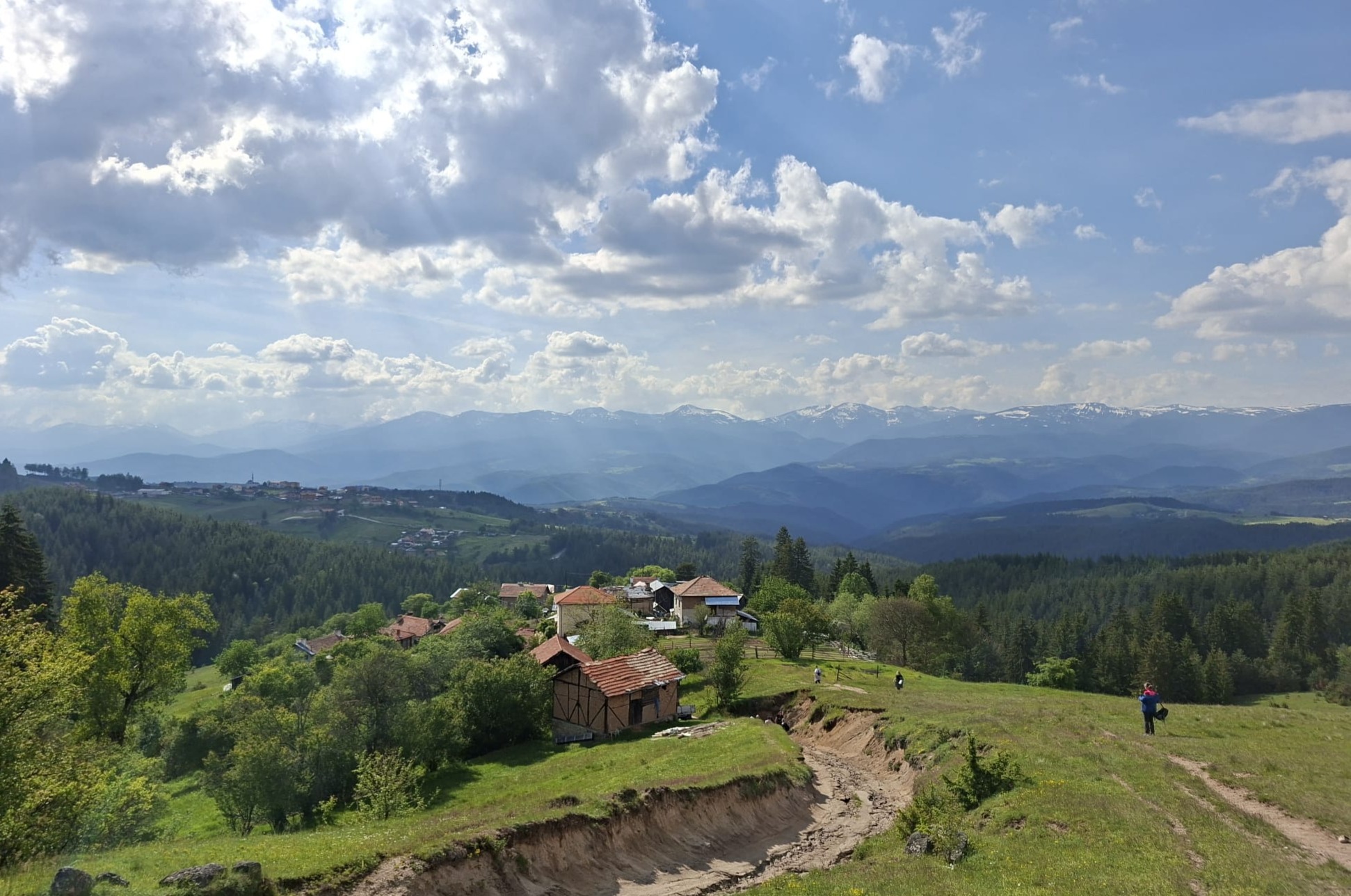
The project took place in the small mountain town of Dobrinishte, Bulgaria and brought together youth workers, educators, facilitators and volunteers from across Europe. During the week we explored how to better support young people through periods of uncertainty and change, using Nonviolent Communication (NVC), non-formal education and a lot of experiential learning.
What the week actually looked like
Instead of spending the week listening to presentations, we learned by experiencing things ourselves.
We reflected and worked in small groups, spent a lot of time outdoors and, above all, talked.
Most activities invited us to explore our own experiences first before thinking about how these tools could later be useful in youth work. Rather than learning a method step by step, we experienced what it feels like to be part of that kind of learning environment.
Before coming to Bulgaria I thought communication was mostly about choosing the right words.
I left realizing that the harder part might actually be listening and making the person speaking feel heard and connected while they’re talking.
During the week we spent a lot of time understanding what sits underneath our emotions, connecting with our needs and learning to communicate from that place instead of reacting automatically. It sounds simple, but it really isn’t.
Some of the exercises may look small on paper.
Taking a few minutes at the end of the day to reflect.
Trying to identify the need behind an emotion instead of focusing only on the emotion itself.
Learning to pause before reacting.
To be honest, it was not easy at all. We are not usually used to taking the time to truly understand our inner processes and needs, or to explore how to make others feel heard. We also rarely practice how to formulate requests based on observation, feelings, needs, and then a clear request, or how to negotiate in a way that allows us to be both assertive and attentive to the needs of others.
I really enjoyed learning about this approach and feel that I can now share these tools with others in the future.
In fact, since coming back home I’ve naturally kept some of those habits and I’ve noticed they help me feel a little more connected to myself and others.
There was one exercise that was especially useful for me, called the “Inner Compass” 🧭. In this activity, we would choose a question we had for ourselves, or an existing conflict or dilemma in our lives, such as “Should I start a business?”. We then analysed a wide range of needs and carefully evaluated, without rushing, how each option made us feel and finally writing down what needs would be met by answering yes and no to that question.
As simple as it may sound, I had never taken the time to analyse my needs in this way before. It was truly an eye-opening experience and my need for clarity was definitely met after the activity.
I found a lot of ease and comfort in these exercises and I genuinely valued every activity the facilitators prepared for us. They gave us powerful tools that I honestly think everyone could benefit from experiencing.
One evening I decided to run an improv session…
Participants were encouraged to propose activities during the evenings and one day, during a small 20-minute break, I decided to write down a few games and offer a small improvisational theatre session for that same evening. My only intention was to share something that personally brings me a lot of joy and hopefully create a fun evening together.
Some people didn’t even know what improv was but it didn’t stop them from joining the activity.
We laughed, had fun together and played games that encouraged active listening, adaptability, creativity and communicating without being afraid of making mistakes. We extended the session because participants didn’t want to stop and afterwards several people asked if we could organise another improv session later in the week. That meant a lot to me.
Even the facilitators joined in, fully committed to the games and laughing as much as everyone else.
Looking around and seeing everyone so engaged made me feel incredibly fulfilled. I loved watching people become more relaxed, more creative and less afraid of making mistakes as the games went on. It made me realise how much joy I get from creating spaces where people can simply have fun and connect with each other.
It was the first time I’d ever facilitated anything but it felt very natural. I managed to lead a session in English with an international group… and I came back thinking:
Maybe I can actually do this.
Afterwards, the facilitators told me they could genuinely imagine me as a facilitator one day.
I don’t know if they’ll ever realise how important those words were.
Until then, becoming a facilitator had never really crossed my mind. Since that evening, it has slowly become one of my biggest personal goals.
The participants
When I think about Dobrinishte now, so many happy memories come to my mind.
I remember laughing after dinner.
I remember long conversations during the hikes, where somehow talking while walking made everything feel more natural.
I remember meaningful activities and how the three facilitators led their sessions so effectively.
I remember spontaneous walks to the village centre or how great it felt to be surrounded by nature.
And I definitely remember how many people joined the improv session despite having absolutely no idea what improvisational theatre even was.
Looking back, I think the people that formed this group is what made the week so special.
The learning happened during the activities, but also in all the little moments in between.
One of the biggest surprises wasn’t only what I learned during the sessions, but the people I met. Since coming back we’ve already been talking about future collaborations, visiting each other’s countries and even applying together for new Erasmus+ projects.
It’s funny how people you’ve known for only a week can sometimes become part of your future plans so naturally.
For me, that’s probably the most valuable kind of networking there is.
What I’m taking home
When I signed up for this project, I expected to learn about NVC and specific tools.
I certainly did.
But I also discovered a world I barely knew existed: facilitation and non-formal education.
I still have an enormous amount to learn.
How to design learning experiences.
How to manage group energy.
How to facilitate meaningful reflection.
How to adapt activities to different groups.
But for the first time, I can actually picture myself doing that one day.
I’m still at the beginning of that journey, but this project definitely made me want to keep exploring it.
A few months ago, if someone had asked me what I wanted to do in the future, I probably wouldn’t have had a very clear answer.
I still don’t have all the answers, but Dobrinishte gave me a direction.
Sometimes that’s enough.
A huge thank you to VIA CIVIC Association and Creamos Europa, the Bulgarian and Spanish partners respectively, the facilitators Nikola Dimov, Silvia Teneva and Radoslava and every participant who made this experience so meaningful.